Abstract
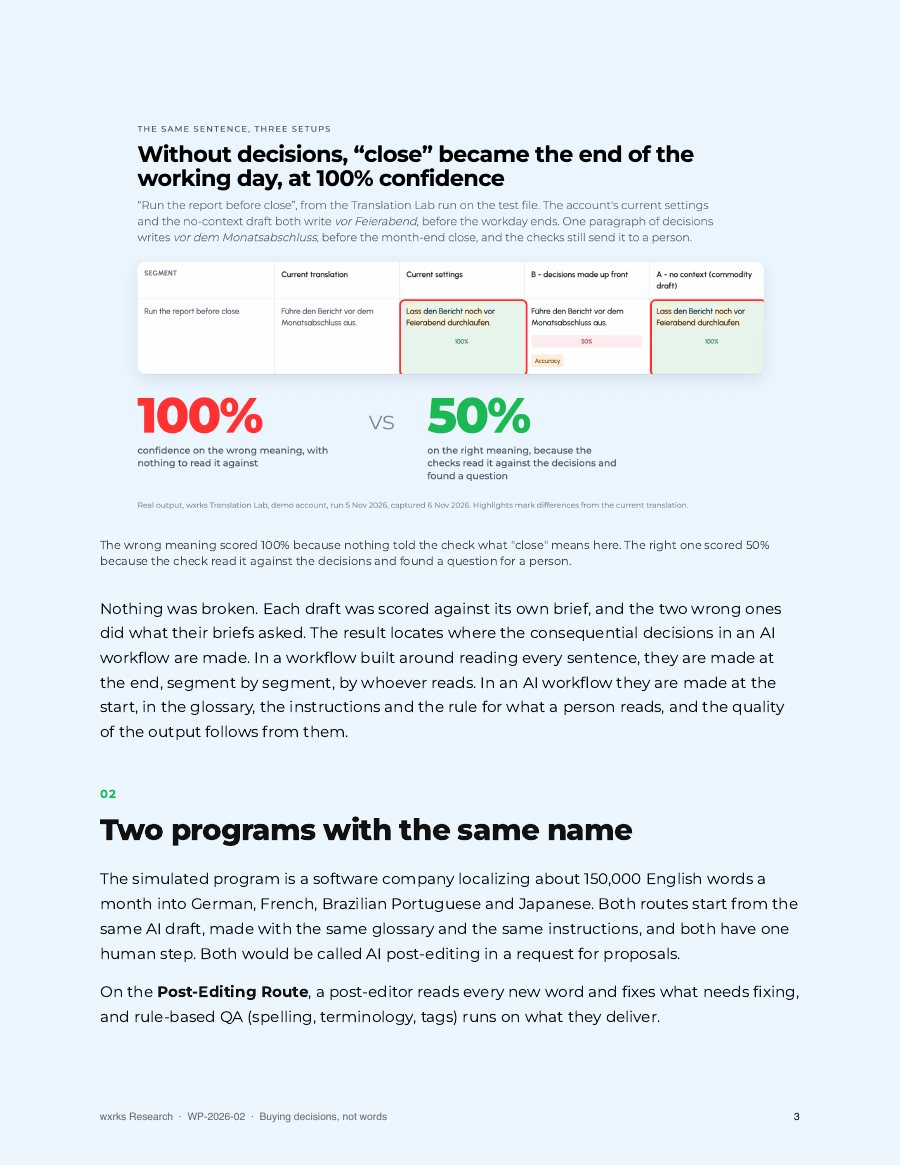
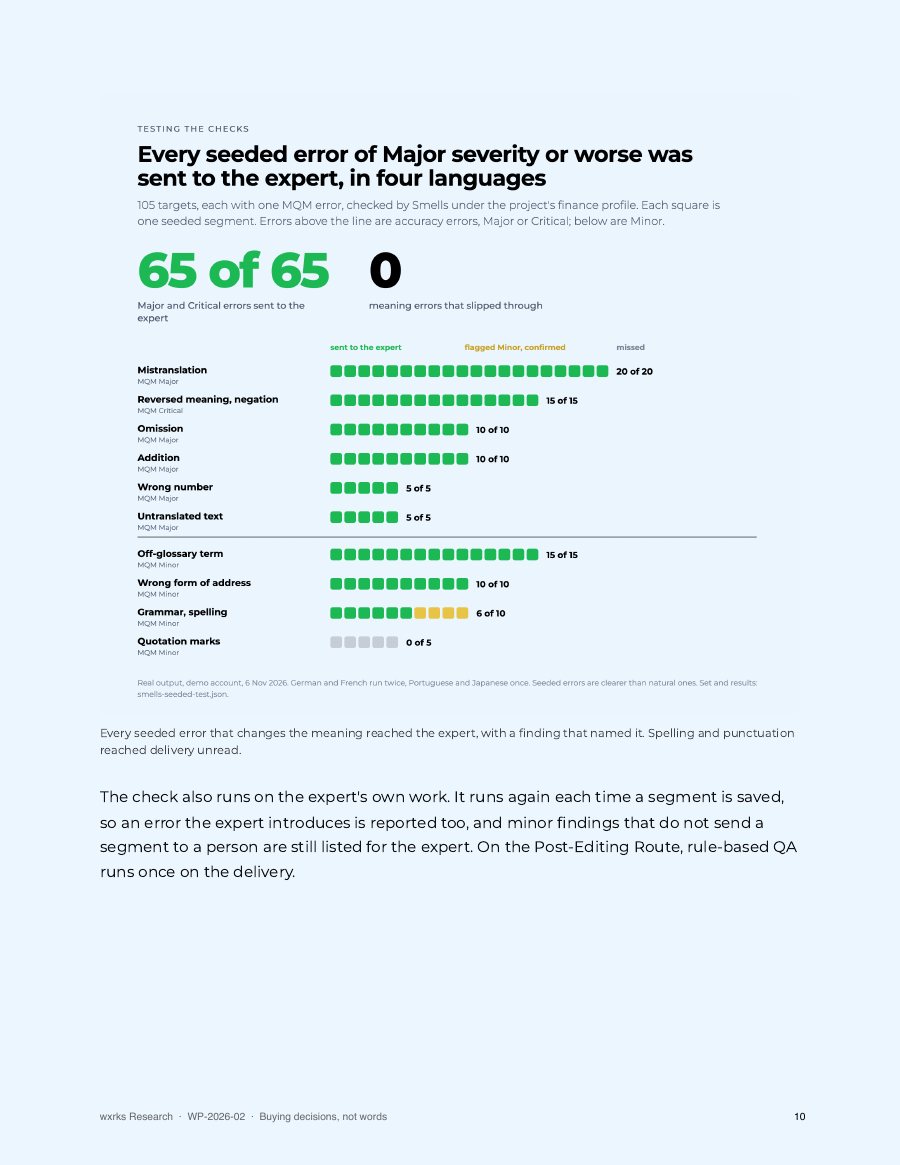
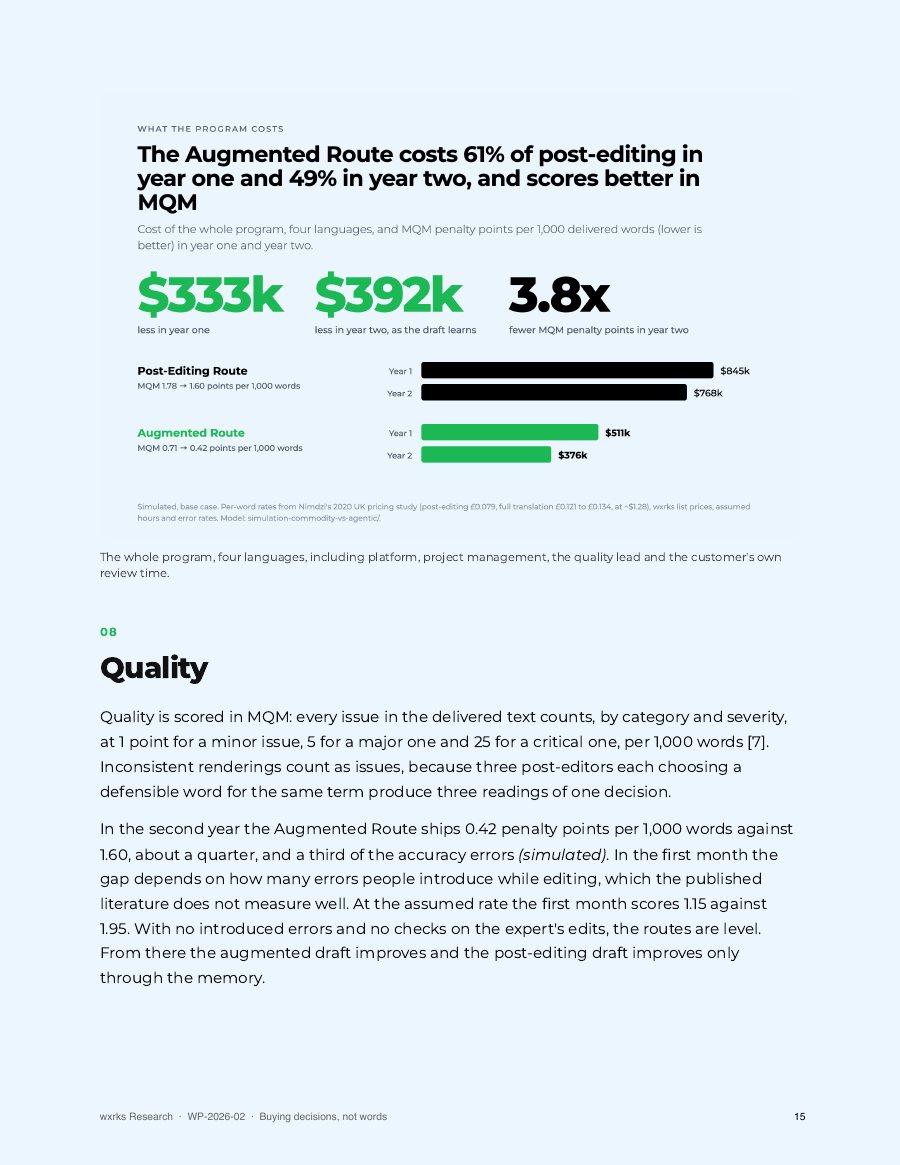
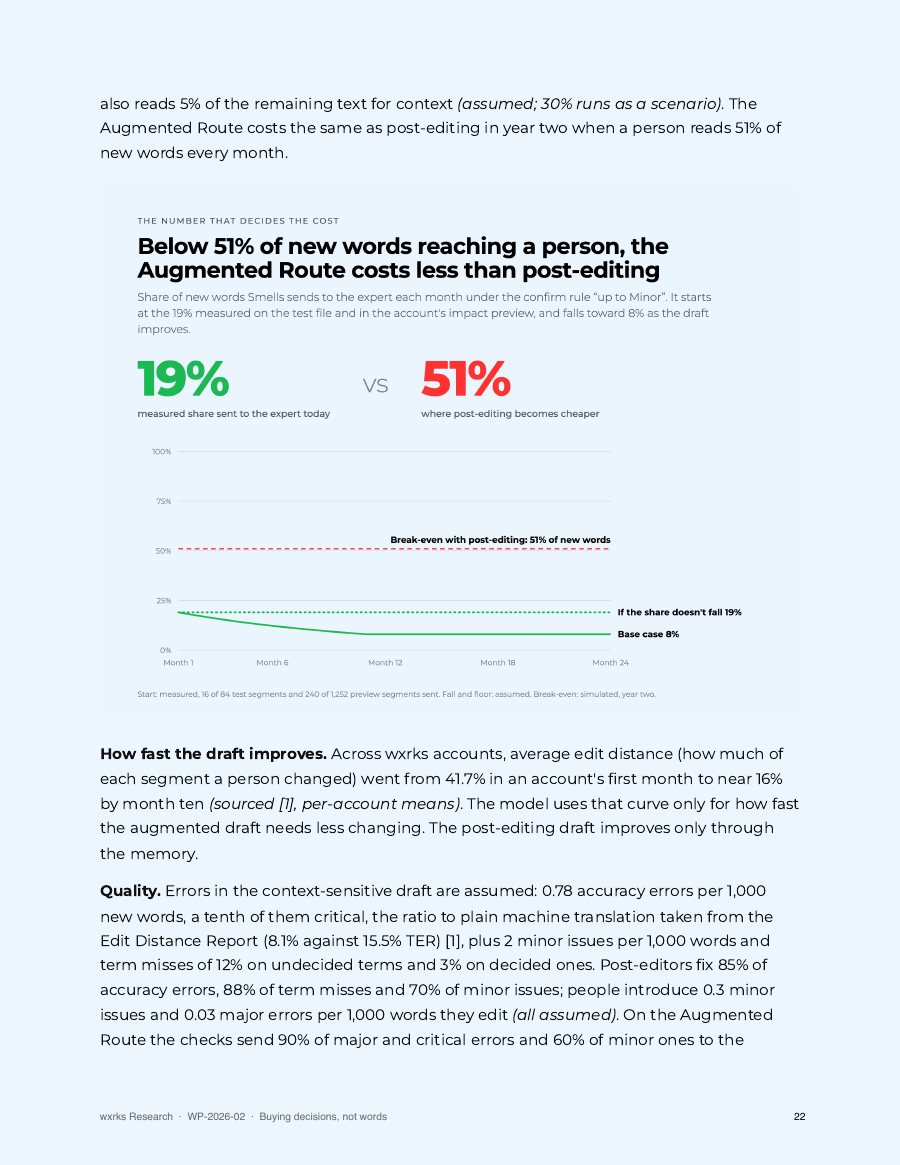
"AI post-editing" now names two different ways of running a localization program. In one, a post-editor reads every new word of an AI draft. In the other, automated checks read every segment and send the ones they doubt to a senior language expert, with a written finding, and the expert's confirmations are written back into the decisions the next draft is made from. This paper compares the two routes on one simulated program: 150,000 English words a month into four languages for 24 months, with rates taken from published pricing research. It tests the parts the comparison rests on with a real help article run through the wxrks platform in German, French, Brazilian Portuguese and Japanese, and with 105 seeded errors. Every seeded error of major or critical severity reached the expert with a finding that named it. In the base case the expert is paid about twice the post-editing rate per word, and by the second year the Augmented Route costs 49% of post-editing and ships about a quarter of the MQM penalty points. The result depends mainly on the share of text a person reads: the routes cost the same when about half of every month's new words reach a person, against 19% measured. Only one scenario, built with every assumption against the Augmented Route, reverses the cost result. The paper also reports what the comparison cannot settle: how many real errors the checks find, how fast the routed share falls, and how many errors people introduce while they edit.
A note on sources. The amounts come from published rate research and a simulation of one program, and are for illustration; a real program's will differ. The proportions rest on how much of the text a person reads, not on the rates. Every figure is marked as sourced, industry, measured, assumed or simulated, and the method, sources and scenarios are in the appendices. wxrks sells the platform tested here and built the model. Before publication the model and the draft were given to an AI model instructed to find the weakest assumptions and the strongest case for post-editing, and the scenarios include the cases it raised.
From the paper
Four pages to start with
Inside the paper
Fourteen sections
- 01One sentence, three setups
- 02Two programs with the same name
- 03Decisions made at the source
- 04The setup work
- 05Findings and scores
- 06Scrutiny by content type
- 07Cost
- 08Quality
- 09Scale
- 10Labor
- 11Tokens
- 12What this paper does not settle
- 13Appendix A. Method, sources and scenarios
- 14Appendix B. Sources
Read it here